Have you ever wondered how roads become firm, safe, and durable? One essential machine in this process is the road roller. This heavy machine features front and rear drums that compact all surfaces smooth. In this article, we explain the main types of road rollers and their vital roles in building quality infrastructure.
Understanding Road Rollers
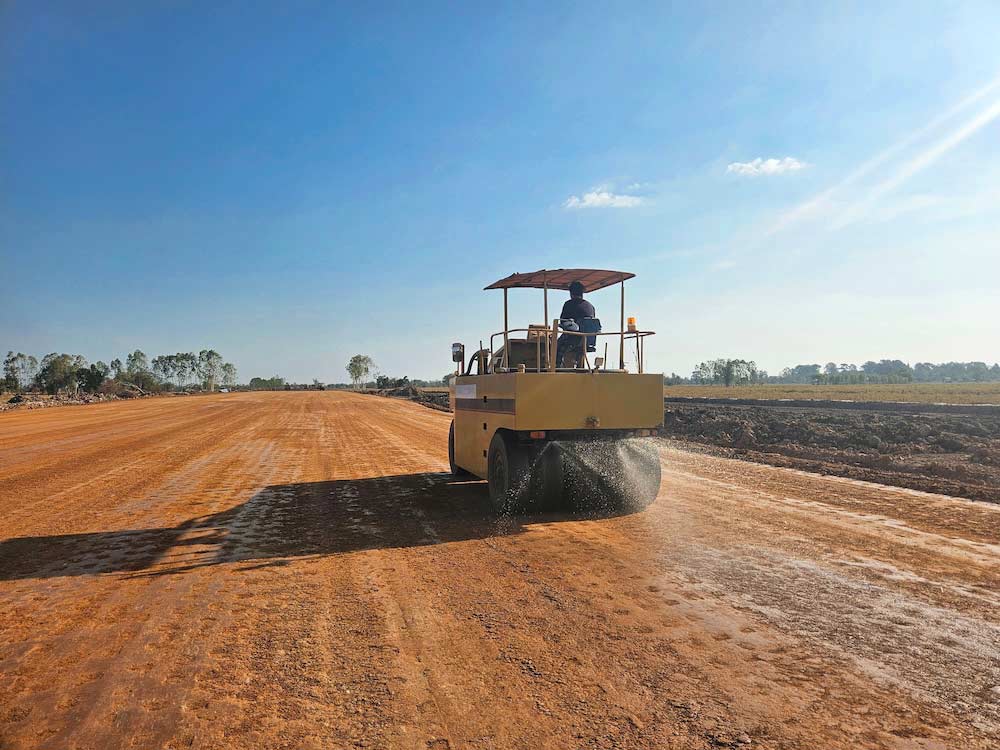
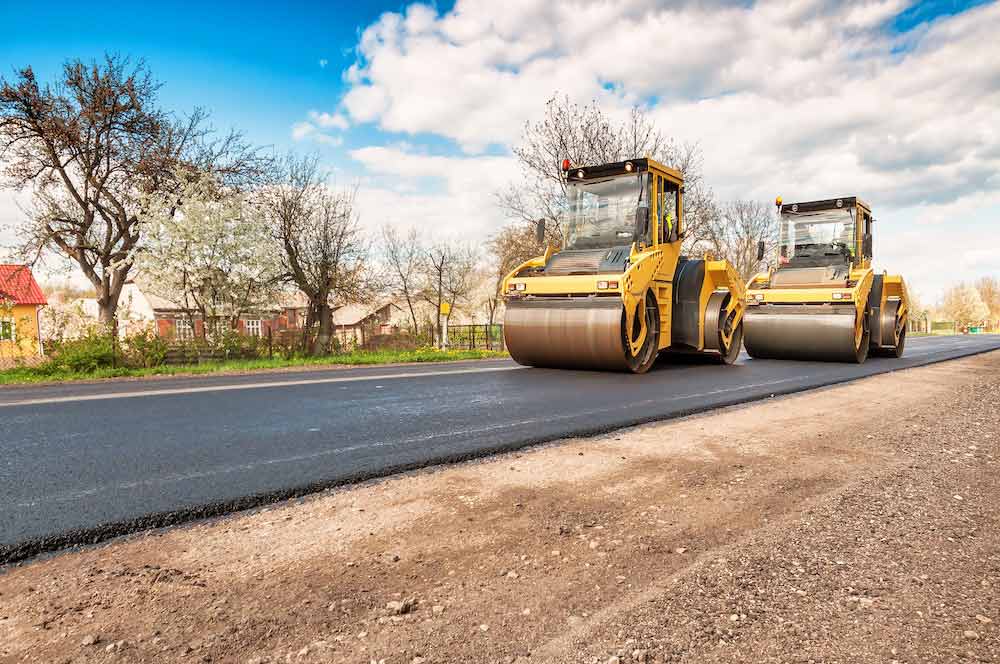
A road roller is a specialized heavy engineering vehicle with cylindrical drums. It compacts subgrade soil or asphalt smoothly using gravitational force. As a result, this process densifies layers of soil and sand to lay a solid foundation for construction.
How Road Rollers Work
Road rollers feature massive wheels in dual front-rear or single drum setups. As the machine moves forward, pressure compresses soil particles together. Consequently, the surface becomes stable and durable under heavy traffic loads.
Furthermore, road rollers work side-by-side with excavators and wheel loaders. Together, these machines construct strong, long-lasting, and safe roadways efficiently.
Electric forklifts play a critical role across various industries. They improve operational efficiency, save time, and reduce manual labor. Furthermore, using electric forklifts minimizes operator injury risks from heavy lifting. Following a proper electric forklift battery charging guide preserves battery performance and extends overall machine service life. In this article, we share proper charging techniques and essential maintenance tips.
Electric Forklifts and Energy Storage Batteries
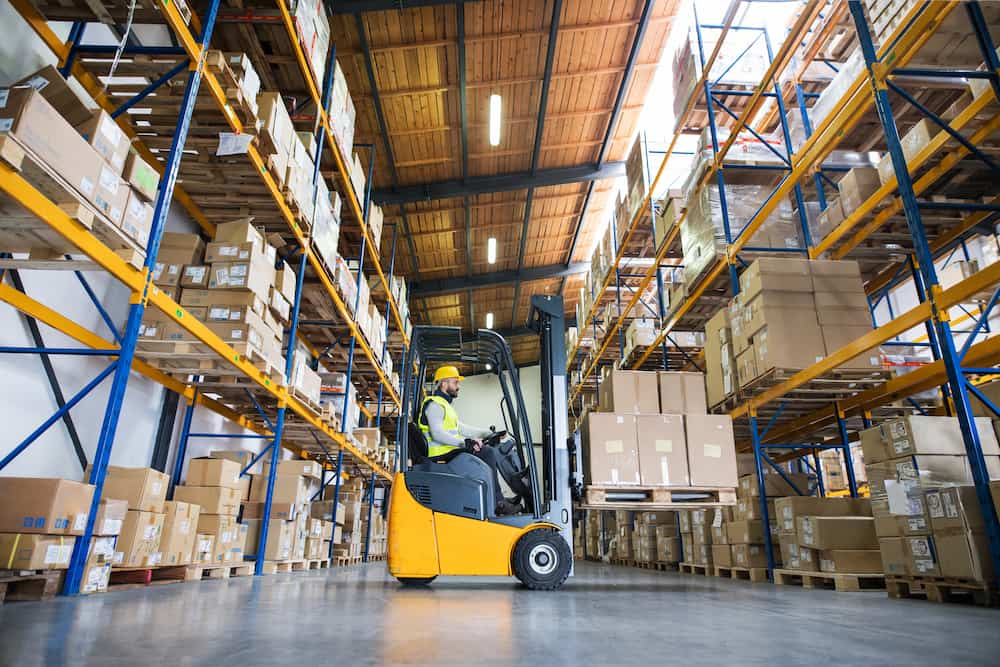
An electric forklift is an industrial vehicle powered by electric motors. It moves smooth loads across flat floors and sloped ramps easily. The vehicle features heavy steel forks that extend from the front chassis. Consequently, operators use these forks to lift and transport large cargo that exceeds human capacity. Additionally, operators can adjust the fork height and tilt angle freely.
The traction battery serves as the heart of an electric forklift. It supplies electric power to drive motors and vital subsystems. These subsystems include hydraulic lift pumps, braking systems, and directional lights. High-quality forklift batteries deliver high discharge efficiency and long operational lifespans.
Lifespan of Forklift Batteries
Technicians measure forklift battery lifespan in charge cycles. One cycle equals discharging the battery down and fully recharging it back to 100%. On average, industrial forklift batteries last 5 to 6 years, or approximately 500 to 1,500 charge cycles.
However, actual battery degradation depends on several factors. These factors include chemical battery type, daily workload intensity, and routine maintenance quality.
Techniques for Charging Electric Forklift Batteries
1. Area Preparation Before Charging
Select a safe charging area away from heat sources and moisture. Ensure the room provides good air ventilation.
Clear all obstacles around the charging station. Park the forklift close to the charger unit.
Inspect power plugs and power cables for any physical damage or wear.
Open the water cap to inspect distilled water levels. Ensure water covers internal cell plates by 1 to 2 centimeters.
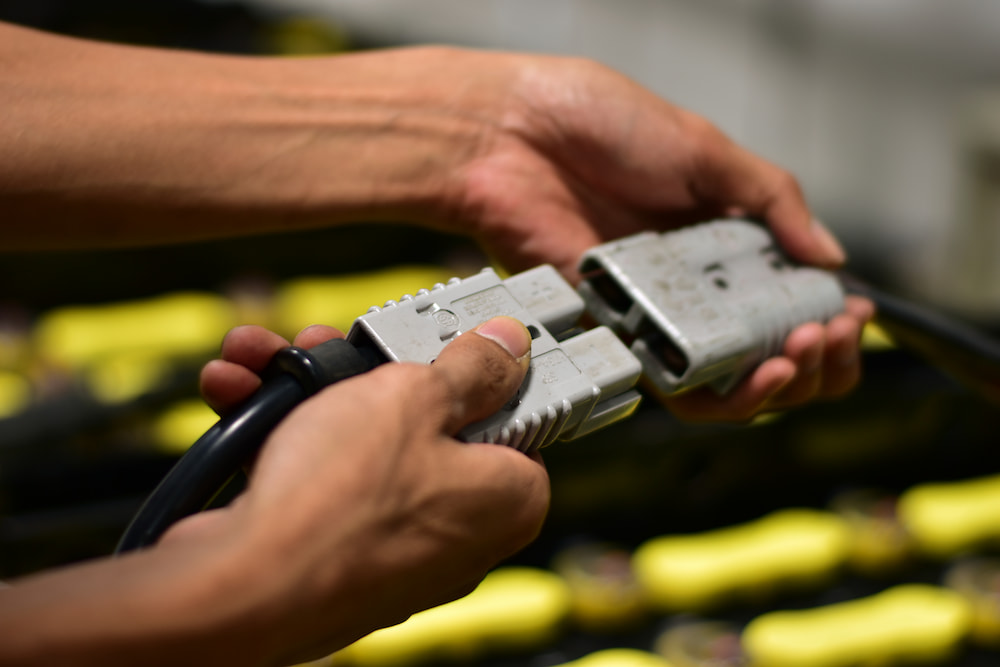
Check connector plugs between the battery and the charger cabinet. Ensure no cracks or electrical leakage risks exist.
2. Battery Charging Protocol
Connect the charging cable plug firmly into the charger cabinet outlet.
Charge the battery continuously for 8 hours per session, depending on battery capacity.
Disconnect the plug safely after the charging cycle completes, then close all protective covers.
Schedule a qualified technician to test cell voltage and specific gravity at least once a month.
Pro Tip: Avoid letting battery capacity drop below 20%. Deep discharging increases charging time and shortens overall battery life. Additionally, avoid charging hot batteries right after heavy shifts to prevent thermal damage.
Maintenance Tips to Extend Forklift Battery Life
Train operators on proper forklift controls before deployment. Always operate machines in clean environments to prevent vehicle damage.
Check battery capacity indicators or meters at least once a week.
Inspect distilled water levels regularly. Top up with pure distilled water to maintain cell efficiency.
Recharge battery cells completely after daily operations to extend working life.
Perform all charging operations in dry, well-ventilated areas to prevent short circuits or fire hazards.
Maintain charger systems regularly to ensure consistent power output and peak operational safety.
If you need reliable electric forklifts for material handling operations, choose Siam Sun Autosales. We offer high-quality electric forklifts at competitive prices to fit all industrial applications. Our fleet comes with multiple capacity choices, a 24-hour maintenance response, a 1-year or 2,000-hour warranty, and ISO 9001:2015 certification. For inquiries, contact Sales at 086-302-1778 today.
Construction sites require various heavy machines. Excavators are among the most critical equipment. However, people often get confused by local names. Are they called backhoes or Makro excavators? Are these terms identical or different? In this article, we explain the difference between Backhoe and Makro Excavator clearly, covering their history and job site benefits.
What is the Difference Between Backhoe and Makro Excavator?
Many people wonder why locals call excavators “Makro” or “Backhoe.” Although these pronunciations differ, their technical meaning is connected.
In fact, there is no physical difference between the two terms in local context. Both names refer to the same type of digging machinery. Originally, the term “Backhoe” comes from “Back” and “Hoe.” It describes a tractor featuring a front loader and a rear digging bucket. Over time, Thai speakers adapted the term “Backhoe” into “Makro.” Therefore, both terms represent earthmoving excavators today.
The History of Backhoe Excavators
Backhoes have a long operational history spanning over 100 years. Initially, manufacturers modified agricultural tractors by mounting digging arms to the rear. The Holt Manufacturing Company in the United States led early developments. Later, engineers introduced hydraulic systems. As a result, excavators became fast and efficient digging machines.
Caterpillar was the first brand imported into Thailand. Subsequently, Komatsu machines arrived. Today, numerous global manufacturers supply excavators across various Thai industrial sectors.
Modern Applications of Excavators
Currently, contractors deploy excavators across construction, mining, agriculture, and public utilities. Furthermore, modern engineering enhancements allow machines to perform diverse tasks. These tasks include trenching, mining, concrete pouring, land clearing, and tree planting.
Benefits of Backhoes in Construction
1. Higher Construction Efficiency
Excavators significantly speed up demanding site work. Because a backhoe scoops large volumes of earth in a single cycle, contractors save both project time and labor costs.
2. Durability in Harsh Terrains
Heavy-duty steel arms and reinforced chassis allow excavators to withstand severe impacts. Additionally, advanced drive systems ensure stability on rough slopes. Therefore, operators work safely without rollover risks, while corrosion-resistant components guarantee a long service life.
3. Multi-Purpose Versatility
Backhoes offer high operational flexibility. Consequently, operators can switch attachments for canal dredging, foundation digging, site grading, or mining applications effortlessly.
4. Advanced Safety Protection Systems
Modern excavators reduce operator injury risks through protective structures. Standard cabins feature a Roll-Over Protective Structure (ROPS) and a Falling Object Protective Structure (FOPS). As a result, operators work with full confidence on active job sites.