Heavy Equipment Maintenance: Excavator & Loader Guide – Siam Sun

ซ่อมบำรุงเครื่องจักรกลหนัก

Heavy Equipment Maintenance: Guide to Extending the Lifespan of Excavators and Loaders

Proper heavy equipment maintenance is the beating heart of business success for construction contractors, concrete batching plant operators, and mining company owners. Heavy machinery such as excavators and wheel loaders represent primary business assets. Having a structured maintenance schedule not only reduces unexpected downtime but also keeps operating costs under control and significantly extends equipment lifespan.

This comprehensive guide outlines correct maintenance protocols along with scheduled service intervals for Korean loaders and Develon excavators to ensure your machinery operates at peak performance at all times.

Maintenance Schedule by Operating Hours

Proper heavy equipment maintenance should be structured according to engine operating hours to prevent minor wear and tear from escalating into costly repairs:

Daily Inspection (Pre-Operation Checks):

  • Check engine oil, hydraulic fluid, and coolant levels.

  • Inspect grease points on swing pivots, pins, and bushings to minimize friction and wear.

  • Check hydraulic hoses for leaks, verify tire pressure, and inspect overall wiring conditions.

Service Interval Every 250 – 500 Hours:

  • Change engine oil and engine oil filters according to manufacturer specifications.

  • Replace fuel filters (both water separator and main fuel filter) to prevent fuel injector clogging.

  • Inspect and clean air filter elements; replace immediately if working in heavily dusty environments.

Major Service Interval Every 1,000 – 2,000 Hours:

  • Replace hydraulic oil, transmission oil, and final drive oil for smooth mechanical operation.

  • Inspect electrical systems, sensors, and recalibrate smart control modules.

Engine and Hydraulic System Maintenance Techniques for Korean Loaders

For operators utilizing Korean loaders or Korean-spec machinery like Develon excavators, special attention must be given to the hydraulic and fuel systems as they serve as the primary power transmission hubs:

  • Use High-Grade Hydraulic Oil: Maintains optimal pressure, ensures quick system response, and prevents internal pump corrosion.

  • Maintain Air Filtration in Dusty Job Sites: For cement batching plants or sand quarries, clean air filters more frequently to prevent dust particles from entering the combustion chamber.

  • Follow Manufacturer Standards: Refer to official technical standards at the Develon Global Website to select genuine factory-spec replacement parts.

5 Warning Signs Your Equipment Needs Immediate Service

If any of the following symptoms occur during operation, drivers should pause work immediately for inspection to prevent catastrophic failure:

  1. Abnormal Noise: Whining or metallic knocking sounds originating from the hydraulic pump or engine compartment.

  2. Slow Hydraulic Response: Slower digging or loading speeds, engine RPM drops, or difficulty lifting the boom/bucket.

  3. Overheating Signals: High engine temperature gauge readings or hydraulic oil temperature warning lights on the display dashboard.

  4. Discolored Exhaust Smoke: Thick black smoke during acceleration or continuous white smoke emission.

  5. Fluid Leaks: Hydraulic oil or engine oil drops pool underneath the chassis or along hose lines.

Comprehensive Maintenance & Genuine Parts Services from Siam Sun

Choosing an authorized service dealer significantly mitigates repair risks and ensures operational continuity. Siam Sun provides complete end-to-end service support:

  • Expert Technician Team: Factory-trained technicians specialized in system diagnostics and maintenance.

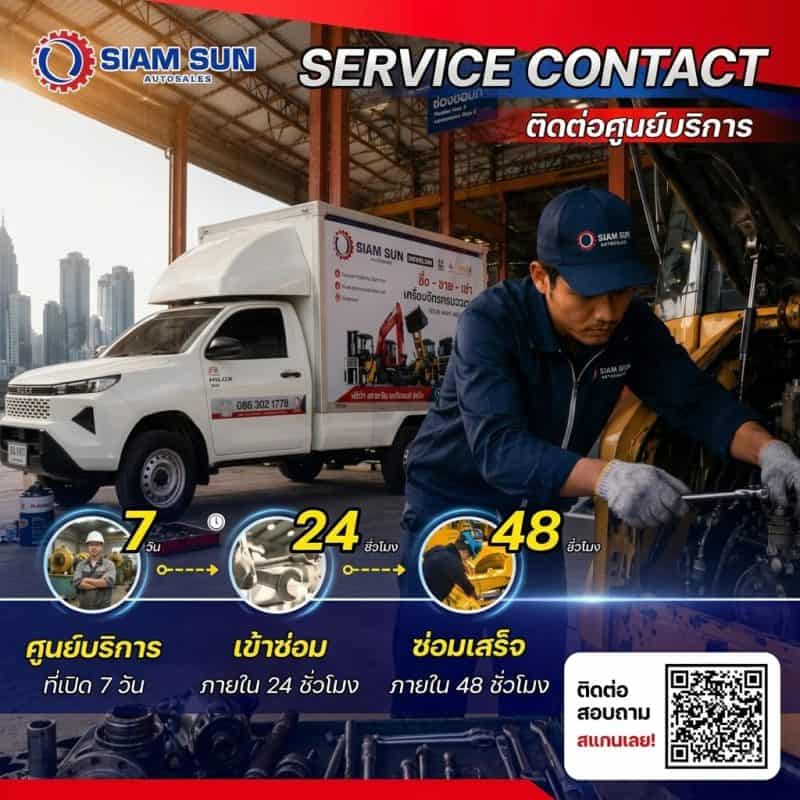
  • Mobile Service Team: On-site mobile service vehicles ready for nationwide scheduled maintenance and repairs.

  • 100% Genuine Parts Stock: Readily available inventory to minimize waiting time and get your equipment back to work fast.

Summary: Strategic Maintenance for Sustainable Profitability

Disciplined inspection and structured heavy equipment maintenance are the ultimate keys to smooth, uninterrupted business operations. If you need to schedule a service checkup, order genuine spare parts, or request expert advice, contact the Siam Sun Service & Sales Center today.
Buy Doosan Excavator: Transition to Develon Guide – Siam Sun

รถขุด Doosan Develon

Can You Still Buy Doosan Excavators? Summary on the Develon Rebranding

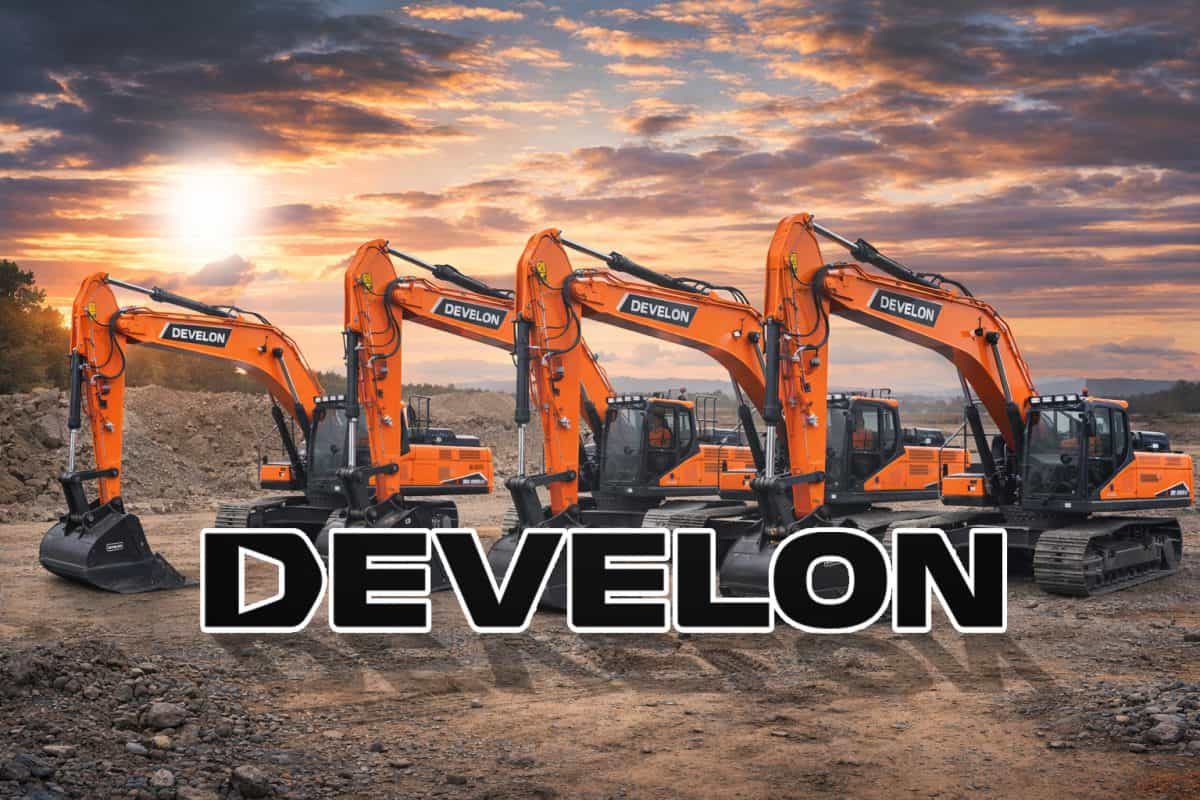
For construction contractors and heavy machinery business owners looking to buy Doosan excavator units or searching for spare parts and service centers for Doosan backhoes, you might wonder about the new brand name Develon appearing in the heavy equipment market. This article addresses all your concerns and provides guidance on selecting high-performance Korean loaders and excavators for maximum return on investment.

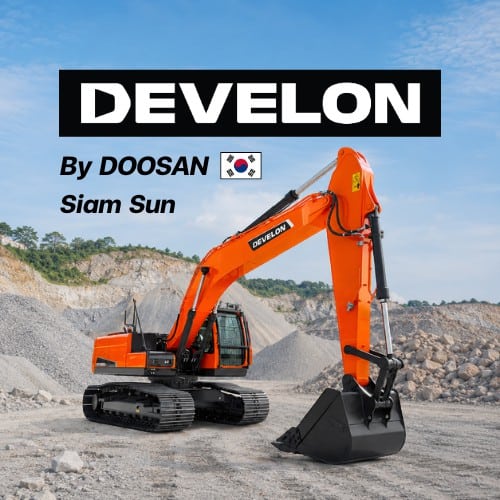
The brand name transition from Doosan Infracore to Develon marks a major global milestone. Thai contractors can rest assured that product quality, manufacturing standards, and robust technology remain fully preserved and carried forward.

Why Do Many Operators Still Choose Doosan Machinery?

Over past decades, Doosan heavy equipment built a strong global reputation, earned immense trust from operators worldwide, including Thailand, due to key advantages:

  • High Engine Durability: Renowned for toughness, reliability, and continuous performance across demanding terrain conditions.

  • Superior Fuel Efficiency: Helps reduce fuel expenses, which represent a major portion of construction operating costs.

  • Standard Performance of Korean Loaders: Advanced hydraulic systems operate quickly, precisely, and respond exceptionally well to operator inputs.

For these reasons, many business owners actively seek out these high-quality machines for their job sites.

Clear Answer: Has Doosan Backhoe Changed to Develon?

The answer is “Yes”! The rebranding from Doosan to Develon is part of a global corporate restructuring by parent company HD Hyundai Infracore. The name Develon combines “Develop” and “Onwards”.

This name change represents elevating technological standards even further. Therefore, if you are looking for new heavy machinery, buying under the name Develon means purchasing the same high-quality excavator you trust, enhanced with smarter modern technology. For more details on this transition, visit the Siam Sun Website.

Does Buying Develon Today Match Original Korean Loader Standards?

If you are concerned about quality or worried that Develon won’t match legacy models, you can rest easy due to the following factors:

Comparison Topic Original Doosan Backhoe Current Develon
Manufacturing Base Standard South Korean Factories Same Factories & Manufacturing Standards
Engine Power Powerful Digging Engine Upgraded Smart Power Control (SPC) Fuel System
Hydraulic System Smooth & High Digging Force Precise Control & Faster Response
Parts & Service Genuine Doosan Parts Genuine Develon Parts (Interchangeable)

Additionally, for Korean loaders, Develon has enhanced cabin safety, comfort, and visibility, reducing operator fatigue and job site accidents.

Benefits of Choosing Heavy Machinery & Services via Siam Sun

The most critical factor when planning to buy Doosan excavator or Develon units is after-sales service. Buying through an authorized distributor guarantees:

  1. In-Stock Genuine Parts: Eliminate long machine downtime with spare parts readily available for both older and newer models.

  2. Expert Technician Team: Technicians trained in maintenance techniques directly from Korean factory standards.

  3. Mobile Service: Mobile teams ready to travel for scheduled maintenance and troubleshooting right at your job site.

Summary: Making a Cost-Effective Decision on Korean Excavators & Loaders

Although the brand name has transitioned from Doosan to Develon, core strengths regarding durability, fuel economy, and investment value remain fully intact. If you want to transition to the latest Develon machinery with special promotions and financing options, explore more details in the Siam Sun Products & Services Category to get expert guidance on the best model for your business.

Buy Develon Excavator & Wheel Loader 2026 Price – Siam Sun

Buy Develon Excavator and Wheel Loader: 2026 Price & Buyer’s Guide

For construction contractors, concrete batching plant operators, sand quarry owners, and mining operators planning to buy Develon excavator units, this Korean heavy machinery brand delivers the exact durability and high operational performance legacy inherited from Doosan. This article dives deep into specifications, updates the latest price trends, and provides strategic recommendations for selecting the most cost-effective wheel loaders for your investment.

Develon is recognized worldwide for its advanced technology, structural robustness, and exceptional long-term ROI. For Thai business operators seeking premium machinery for heavy-duty tasks, visit the official Siam Sun Website to explore world-class manufacturing standards and machinery technology.

Why Choosing to Buy Develon Excavator is a Worthy Investment

The transition from Doosan to Develon represents more than just a brand name update—it is a major technological upgrade designed to meet modern job site requirements. Key highlights include:

  • Powerful and Fuel-Efficient Engine: Equipped with Smart Power Control (SPC) technology that optimizes engine output and hydraulic pressure based on workload, reducing fuel consumption by up to 5–10% compared to previous generations.

  • Spacious, Safe, and Comfortable Cabin: Ergonomically designed cabin reduces operator fatigue during long shifts, featuring efficient air conditioning and superior vibration isolation.

  • High-Precision Hydraulic System: Re-engineered hydraulics deliver lightning-fast responsiveness, massive breakout force, and faster cycle times to finish jobs quicker.

2026 Price Trends when Planning to Buy Develon Excavator

Selecting the correct machine tonnage for your application is essential for budget control and operational efficiency. Below is an overview of Develon excavator categories and applications:

Excavator Category Weight Range (Tons) Ideal Applications & Job Sites
Mini Excavators 3.5 – 5.5 Tons Trench digging, confined space work, landscaping, pipe laying
Medium Excavators 14 – 22 Tons General earthmoving, land clearing, canals, irrigation projects
Heavy Excavators 30 – 50+ Tons Mining, rock quarry blasting, large foundation operations

*Note: Prices vary depending on promotions, financing terms, attachments, and dealer options.

Develon Wheel Loaders for Concrete Plants and Rock Quarries

Beyond excavators, Develon wheel loaders are widely popular in construction and materials processing plants thanks to their reinforced chassis and high dumping height design:

  • High Loading Capacity & Fast Cycles: Significantly reduces cycle time when loading rocks, sand, or concrete aggregates.

  • Wide Visibility Cab: 360-degree panoramic glass design eliminates blind spots and boosts job site safety.

  • Rapid ROI: Excellent balance between purchase price, operating efficiency, and fuel economy ensures high returns on investment.

3 Essential Factors Before You Buy Develon Excavator

  1. Job Site Requirements: For hard soil or rock quarries, opt for Heavy-Duty buckets and higher engine horsepower.

  2. Authorized Service Center & Parts Availability: Ensure your local dealer maintains ready stock of genuine parts and offers Mobile Service support.

  3. Financial Terms & Offers: Compare interest rates, down payment requirements, and installment periods to match your company’s cash flow.

Summary: Optimize Your Heavy Machinery Investment

Deciding to buy Develon excavator or wheel loader machinery requires balancing fuel economy, durability, and after-sales service support. For detailed specs, latest pricing promotions, or instant quotes, contact the Siam Sun Service & Sales Center today.
Types of Aerial Work Platforms and Safety Precautions for Use.

รถลิฟต์กระเช้าในคลังสินค้า
Warehouse Cherry Picker and Aerial Lift

Lifting heavy objects or working at high elevations poses significant safety risks. Workplace accidents frequently occur due to improper lifting techniques or unreliable equipment. To address these challenges, aerial lifting technology has been continuously developed to enhance both safety and efficiency. One of the most widely adopted machines today is the “Aerial Work Platform” (Cherry Picker / Order Picker)—a safe, versatile, and highly convenient solution. In this article, let’s explore the different types of aerial lifts, their key applications, and essential safety precautions.

Aerial Work Platforms (Electric Lifts)

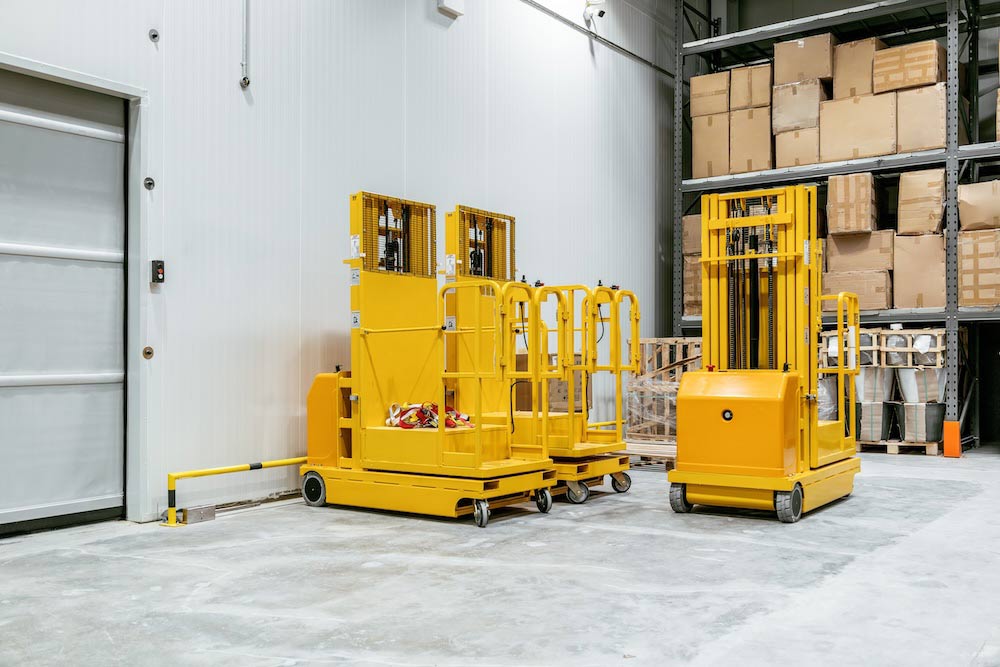
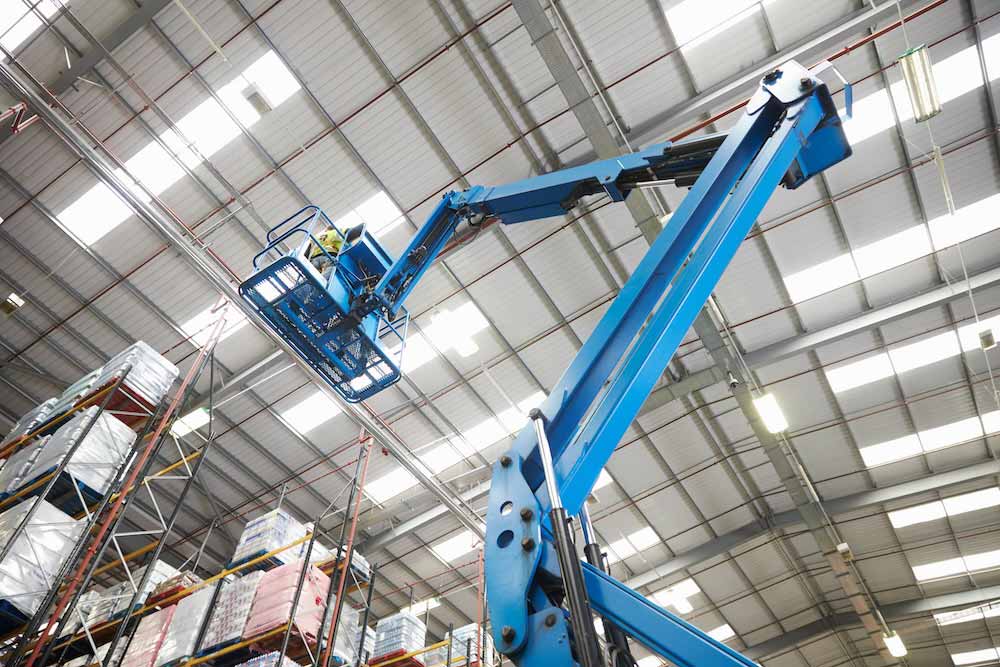
Aerial Work Platforms (Warehouse Pickers) are specialized machinery engineered to elevate personnel for high-altitude tasks safely, flexibly, and efficiently. Featuring an operator platform or basket driven by hydraulic or electric systems, these machines allow seamless relocation from one work zone to another.

Key Advantages of Using Aerial Work Platforms

  • Enhanced Safety : Minimizes the risk of falling from height, which is a leading cause of occupational injuries.
  • Increased Productivity : Allows operators to work much faster without spending time setting up or climbing scaffolding and ladders.
  • Cost Optimization : Reduces the number of workers needed to carry out high-level operations.
  • Greater Mobility : Moves swiftly and safely across various work zones on site.

Applications of Aerial Work Platforms

Aerial work platforms can be utilized in a wide array of applications, including:

  • Construction: Elevating workers and building materials safely.
  • High-Level Installation: Signage mounting, electrical wiring, and exterior painting.
  • Maintenance Work: Servicing power lines, telecommunications cables, and roof repairs.
  • Building Exterior Care: High-rise building cleaning and facade maintenance.
  • Public Utilities: Traffic signal maintenance and road sign installation.

Types of Aerial Work Platforms

Aerial work platforms come in various types depending on operational requirements. Choosing the right lift for the job ensures maximum safety and performance. Based on structural design, they are classified into 3 main types:

1. Boom Lift

A compact machinery featuring a flexible platform arm that can extend vertically and horizontally in multiple directions. Ideal for tight spaces or areas with obstacles unreachable by traditional scaffolding. Operators can maneuver and control movements directly via an onboard control panel.

2. Vertical Mast Lift (Aerial Work Platform)

A straight vertical mast lifting machine that is easy to operate and maneuver. The platform offers spacious entry and exit access. Equipped with deck extension options, it can extend forward over obstacles or varying floor levels, making it ideal for high-altitude jobs requiring quick up-and-down mobility.

3. Scissor Lift

Featuring a classic “X”-shaped scissor mechanism, this lift offers high stability and superior heavy-load capacity. The vertical height can be adjusted rapidly, making it suitable for lifting heavy materials in confined indoor or outdoor spaces during general construction, installation, maintenance, and cleaning tasks.

Warehouse Scissor Lift and Aerial Work Platform

Safety Precautions When Operating Aerial Lifts

While aerial platforms are highly beneficial tools for work at height, improper operation can lead to severe hazards. Operators should strictly follow these essential safety guidelines:

Before Operation

  • Perform a full pre-operation inspection to ensure no components are damaged.
  • Inspect electrical and hydraulic systems thoroughly.
  • Check personal protective equipment (PPE), including safety harnesses and hard hats.
  • Read and thoroughly understand the operational manual.
  • Ensure all operators are fully trained and properly certified.

During Operation

  • Wear safety protective gear at all times.
  • Never operate during severe weather conditions such as heavy rain or high winds.
  • Do not exceed the rated load capacity limit.
  • Stay cautious of overhead hazards and surrounding obstacles.
  • Do not lean over or step outside the platform railings.
  • Avoid operating the machinery on inclined or uneven surfaces.

After Operation

  • Park and store the lift indoors in a well-ventilated area.
  • Inspect and clean the machine after use.

For businesses seeking reliable aerial work platforms for factories or warehouses, look no further than SIAM SUN—a leading importer of heavy machinery from top global manufacturers. We offer affordable aerial lifts and work platforms for high-altitude jobs, as well as wheel loaders, excavators, and forklifts at accessible prices to meet every business scale. Choose from a wide variety of models and sizes, backed by 24-hour maintenance services, a 1-year or 2,000-hour warranty, and free 50-point inspections over 2 years. If repairs take longer than 7 days, we provide a free backup aerial lift to keep your operations running smoothly.

For sales or rental inquiries, please contact our Sales Department at Tel. 086-302-1778, Customer Service at Tel. 086-307-1778, or connect via LINE: @siamsun

References

An In-Depth Look: What Causes a Loss of Power in Excavators?

รถขุดไม่มีแรงเกิดจากอะไร สาเหตุและวิธีซ่อมบำรุงที่เหมาะสม

For anyone experiencing operational issues with their excavator, particularly symptoms like a lack of power or travel motor problems without knowing the root cause—how should you perform a preliminary check, and what consequences might arise if ignored? In this article, we have all the answers for you.

Causes and Maintenance Solutions for Excavator Power Loss

3 Main Causes of Power Loss in Backhoe Excavators

The primary causes behind backhoe performance issues can generally be categorized into 3 areas: the engine, the hydraulic system, and structural components or replacement parts. Here is a breakdown of these issues:

  • Engine Issues

An excavator lacking power or operating slowly can often stem from engine problems. Noticeable signs include hard starting and loss of driving or operational force. As a preliminary step, inspect the battery and filters for abnormalities, filter clogging, bushing integrity, and starting circuits to enable targeted repairs.

  • Hydraulic System Issues

Another common cause of excavator power loss is hydraulic system malfunction due to leakage. This includes External Leaks, which are visible and result in dropping hydraulic fluid levels, and Internal Leaks occurring inside the cylinder between high-pressure and low-pressure chambers without visible fluid loss. Internal leaks prevent the boom from lifting properly, leading to severe power loss.

  • Structural and Mechanical Issues

Lastly, issues caused by component wear and tear directly impact the structural and mechanical integrity of the backhoe excavator. This reduces working efficiency while simultaneously compromising machine stability and travel mobility.

Excavator Maintenance Guidelines

For operators encountering performance issues who wish to restore their backhoe to full operational capacity, understanding the concept of “excavator maintenance” is the essential first step. The scope of maintenance involves keeping machinery constantly ready for operation while avoiding breakdowns that could disrupt work schedules.

The most suitable maintenance strategy for excavators is “Preventive Maintenance” (PM), which focuses on preventing potential issues through scheduled inspections and routine daily care. This approach significantly extends the machine’s lifespan, minimizes accident risks, and ensures smooth operational workflow.

Excavator Maintenance Guidelines to Resolve Power Loss

4 Daily Inspection Checklist Items for Excavators

  1. Check for Fluid Leaks at All Points : Prevent fuel and hydraulic oil leaks across hose and pipe systems to avoid component damage, loss of power, and potential fire hazards during engine startup.
  2. Always Measure Engine Oil and Coolant Levels : Maintaining optimal levels ensures smooth engine operation, prevents overheating, and extends engine lifespan for long-term reliability.
  3. Warm Up the Engine for 10-30 Minutes Before Work : Check instrument panel gauges during warm-up to verify system readiness, detect any faults early, and allow prompt repair or part replacement.
  4. Check Hydraulic Oil and Swing Motor Gearbox Oil Levels : Fully retract all hydraulic cylinders to accurately measure oil levels, ensuring it falls between the upper and lower red gauge lines. If below the lower line, top up before operation to prevent power loss.

Extend machine lifespan and keep your excavator working at maximum performance with comprehensive excavator repair and maintenance services from SIAM SUN. We offer 24-hour response service along with complete rental and purchase solutions, backed by ISO 9001:2015 certification. Enjoy peace of mind with our fully integrated spare parts center and 4 service branches across Thailand. For inquiries, contact Sales at Tel. 086-302-1778 or Customer Service at Tel. 086-307-1778.

References

3 Most Popular Types of Forklifts in Warehousing and Industry

รถฟอร์กลิฟต์
Warehouse Forklift Truck Group

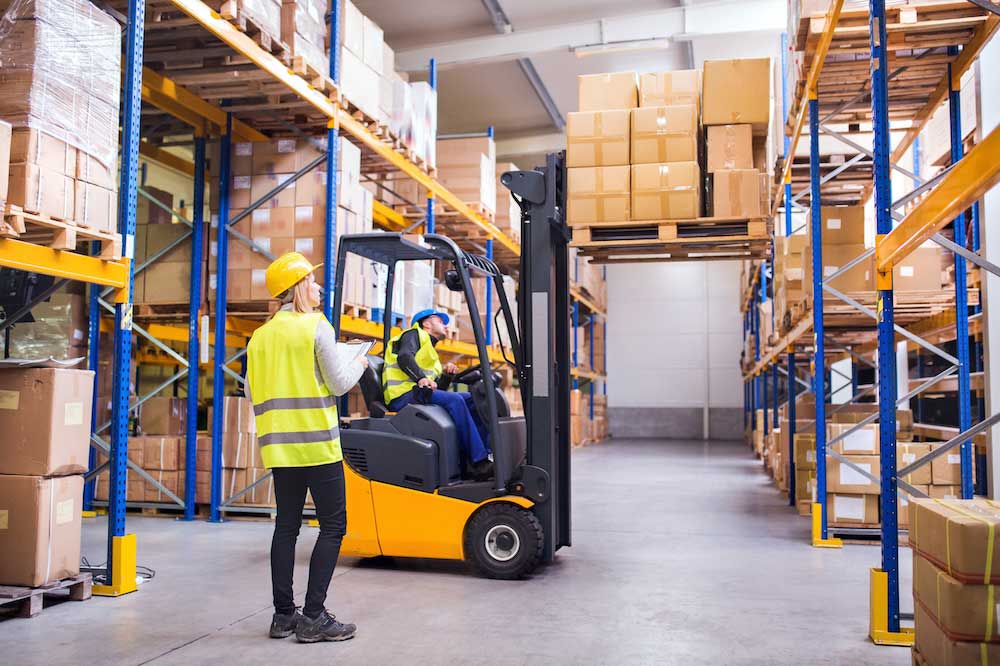
Forklift trucks, commonly referred to simply as forklifts, act as indispensable assistants in warehouses, industrial manufacturing plants, and construction sites. They allow for the transportation of heavy, large-scale materials with speed, convenience, and safety. However, did you know that forklifts come in various types, each specifically designed for different operational needs? In this article, let’s explore the common types of forklifts, understand how they differ, and learn how to choose the right model for your business applications.

How Many Types of Forklifts Are There?

A forklift serves as an iron arm that significantly boosts the efficiency of heavy load handling. It has become a crucial asset in warehouses, manufacturing plants, logistics ports, construction sites, and any facility requiring heavy inventory management.

For those looking to buy or rent a forklift but unsure about the available types and which one to choose, here is a complete guide to help you decide.

1. Electric Forklift

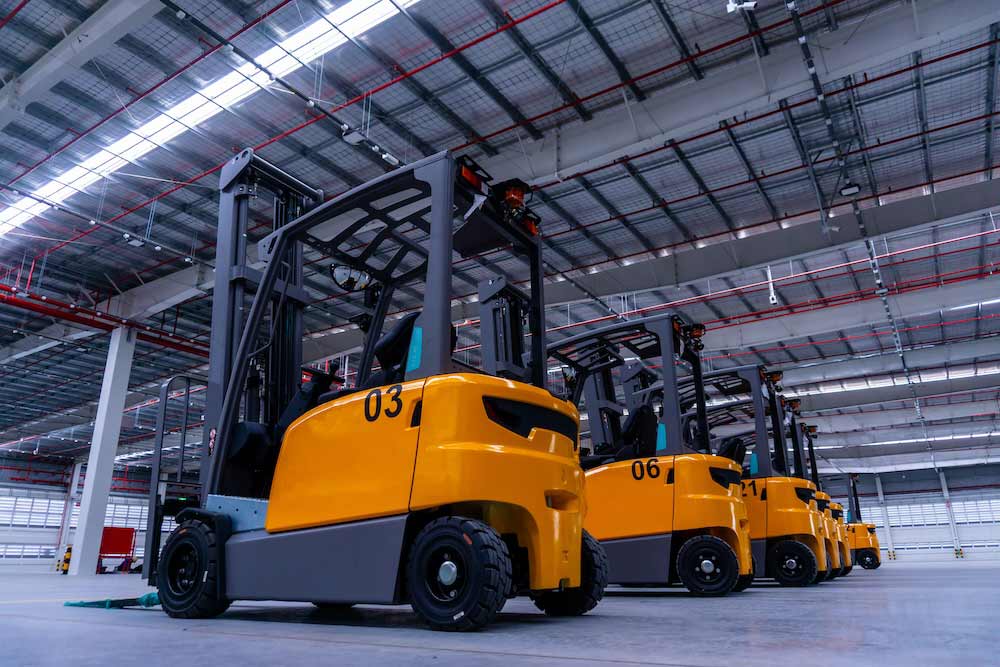
Electric forklifts run on battery power without requiring internal combustion fuel, resulting in zero engine noise, zero emissions, and no exhaust smoke. Equipped with compact engines, they can easily operate in narrow aisles and indoor environments. They are ideal for indoor facilities such as distribution centers, warehouses, food and pharmaceutical storage, as well as cold storage rooms.

Pros

  • Cost-Effective : Eliminates the need for regular fluid changes such as engine oil, radiator coolant, or transmission fluid.
  • Employee-Friendly : Operates quietly with zero soot or emissions, providing a healthier working environment.
  • High Maneuverability : Compact body with a tight turning radius, ideal for confined spaces.
  • Durability : Functions reliably in sub-zero temperatures, such as cold storage and freezing rooms.
  • Easy Maintenance : Requires no petrol, diesel, or gas fuel systems.

Cons

  • Requires regular battery charging after shift completions.
  • Demands a dedicated charging station within the facility.
  • A spare battery is recommended for continuous multi-shift operations.
  • Requires a well-ventilated area for safe battery charging.

2. Internal Combustion Engine (IC) Forklift

Internal Combustion (IC) forklifts utilize traditional fuel engines powered by liquid fuels (diesel and petrol) or gas (CNG and LPG). These engines are highly durable, long-lasting, and deliver massive lifting capacities suitable for multi-ton loads. They are ideal for outdoor environments, such as open storage yards, seaport container yards, and heavy logistics centers.

Pros

  • Continuous Long Hours : Can operate non-stop without downtime for battery recharging.
  • Weather Resistant : Withstands extreme heat, rain, and dusty outdoor environments.
  • Quick Refueling : Refuels rapidly to resume immediate operation.

Cons

  • Engine noise and toxic exhaust emissions impact operator health and indoor air quality.
  • Larger vehicle frame with a wide turning radius, making it unsuitable for narrow spaces.
  • Subject to fluctuating and potentially rising fuel costs.
  • Requires regular engine and mechanical maintenance.

3. Specialized Forklifts

  • Rider Electric Counterbalance Forklift : Features front-mounted forks designed specifically for lifting and transporting pallets and general goods.
  • Side Loader Forklift : Moves sideways to drive down narrow aisles, lifting and stacking goods directly onto racking without turning.
  • Rough Terrain Forklift : Equipped with large, heavy-duty tread tires for gravel and uneven terrain, providing superior stability at construction and agricultural sites.
  • Telehandler Forklift : Features a telescopic boom arm offering extended forward reach and high lifting capabilities, perfect for large construction sites and high-bay warehouses.
Forklifts for Warehouse Logistics Operations

Key Factors in Selecting the Right Forklift

  • Nature of Work: Evaluate required lifting capacity, working space, and ground surface conditions.
  • Operating Location: Determine whether the forklift will be used indoors or outdoors.
  • Budget: Compare prices across suppliers based on forklift type, lifting capacity, and specific functional features.
  • Ease of Maintenance: Choose models with readily available, cost-effective replacement parts.
  • After-Sales Service: Partner with suppliers offering comprehensive technical support, service centers, and experienced technicians.

Forklifts are essential labor-saving machines that enhance operational speed and efficiency. For business owners seeking top-quality forklifts, SIAM SUN offers zero-emission electric forklifts that operate quietly and energy-efficiently at competitive prices. We cater to businesses of all sizes with multiple models, backed by a 1-year or 2,000-hour warranty and ISO 9001:2015 certification. Furthermore, we maintain a complete spare parts center and 4 service branches across Thailand to deliver exceptional customer service.

For sales inquiries, contact Tel. 086-302-1778; Customer Service Tel. 086-307-1778, or connect via LINE: @siamsun

References

Guide to Choosing the Right Crawler Excavator for Your Project.

รถขุดตีนตะขาบกำลังทำงาน ปรับพื้นที่ หน้าดินก่อสร้าง

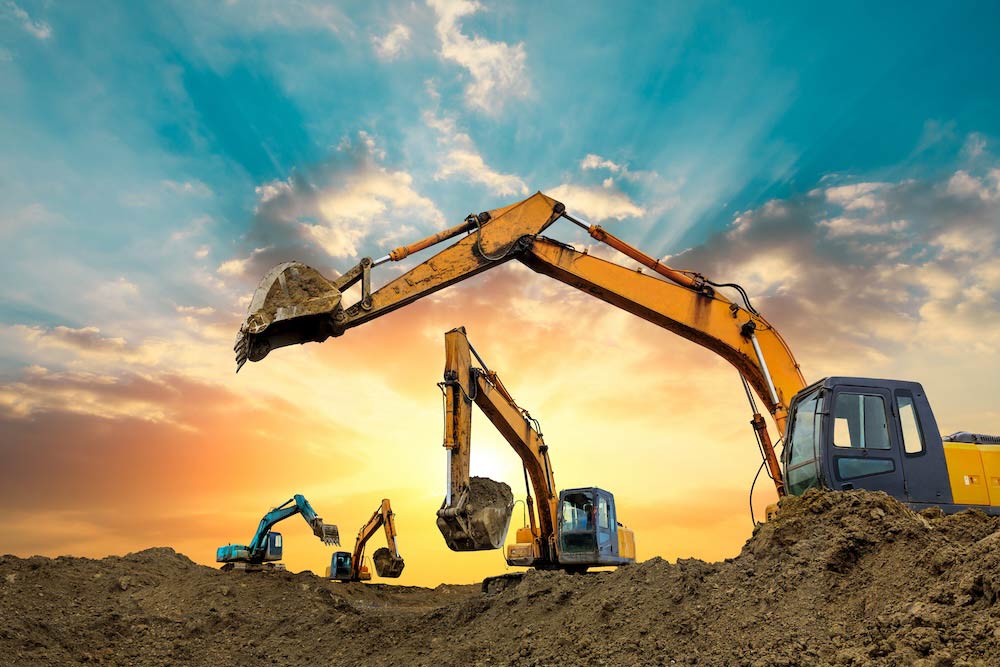
Crawler excavators, commonly known as “backhoes,” act as the limbs of construction work, assisting in digging, ground leveling, and earth moving. All of these heavy-duty tasks rely heavily on crawler excavators. However, with a wide variety of models and sizes available, selecting the right crawler excavator—as well as wheeled excavators suited for specific tasks—becomes a delicate process that requires careful consideration. In this article, we will reveal key tips for choosing the right crawler excavator to ensure efficient, safe, and cost-effective operations.

Crawler excavator working on ground leveling and earthwork at a construction site

Key Functions of Crawler Excavators

Crawler excavators, or backhoes, are essential construction vehicles that act as the vital arms and legs for engineers and contractors. They can be utilized across a wide variety of applications, such as:

  • Digging and Trenching: Whether digging foundation pits, ponds, or trenches, crawler excavators execute tasks with speed and precision. Equipped with digging arms of various sizes and designs, they are ready for diverse job demands.
  • Material Handling: The excavator arm efficiently scoops and transfers various materials such as soil, sand, and gravel to targeted locations conveniently, quickly, and with reduced labor costs.
  • Ground Leveling: Tracked undercarriages make surface leveling effortless, creating smooth, even ground ideal for site preparation prior to construction or post-landfilling leveling.
  • Demolition Work: Utilizing high hydraulic pressure and power, crawler excavators can effectively demolish certain structures, such as old walls and buildings.

Key Factors to Consider When Selecting a Crawler Excavator

Given the wide range of capabilities mentioned above, users should carefully select the most suitable type of crawler excavator. A practical decision framework can be based on the following 4 considerations:

1. Select Based on Ground Conditions

Soil conditions heavily impact the mobility and performance of a crawler excavator. To maximize operational performance, choose the machinery according to the following 3 soil profiles:

  • Hard Ground: Select excavators with high digging power, robust boom arms, and wide undercarriages to provide superior traction and prevent slipping.
  • Soft/Muddy Soil: Choose lightweight machines with low ground bearing pressure to prevent sinking, featuring wide tracks to distribute weight effectively.
  • Confined Workspaces: Opt for compact models with tight turning radiuses for agility; in such conditions, wheeled excavators may offer a better solution.

2. Select Based on Machine Stability

In addition to soil conditions, machine stability is a critical factor. It affects not only operational efficiency but also safety and long-term cost-effectiveness. Evaluate stability through these 3 machine components:

  • Undercarriage: Choose machines with wide undercarriages for optimal balance and rollover prevention, especially when working on slopes.
  • Excavator Arm (Boom/Dipper): Select robust, durable arms that withstand impact and torsional force without bending or deforming, ensuring precise and safe operations.
  • Hydraulic System: Opt for high-efficiency hydraulic systems with precise control and minimal leakage risk, ensuring long-term durability and ROI.

3. Consider Setup and Transportation Mobility

Another crucial factor is transportability and ease of installation. This should not be overlooked, as it impacts convenience, speed, and cost savings regarding time and labor.

  • Size: Select an excavator size suited to your job site dimensions and convenient for transportation and installation.
  • Weight: Choose a machine weight that avoids causing damage to road surfaces or bridge structures during transit.
  • Transportation: Select models that offer easy transportation methods and simple disassembly/assembly processes.
Guidelines for selecting the right crawler excavator for specific construction applications

4. Evaluate Maintenance and After-Sales Support

The final consideration is choosing an excavator that offers manageable maintenance, considering convenience, expense, and long-term value. Business operators should assess the following key elements:

  • Spare Parts: Choose crawler excavators with readily available and reasonably priced spare parts.
  • Service Network: Partner with suppliers that have nearby service centers and certified technicians.
  • Warranty: Select machines backed by comprehensive long-term warranties protecting against component failures.

Understanding Types of Crawler Excavators

After considering key purchasing factors, it is important to familiarize yourself with the distinct types of crawler excavators to select the best match. Each type offers specific highlights and roles:

  • Standard Crawler Excavators: Ideal for general earthworks like digging, grading, backfilling, and light demolition. They come in various sizes and engine power capacities, controlled by hydraulic systems, with optional front dozer blades.
  • Wide-Track Crawler Excavators: Feature wider track shoes and lower ground pressure than standard models, making them perfect for soft ground, mud, and marshy terrain without sinking.
  • Demolition-Equipped Crawler Excavators: Engineered for heavy demolition, these machines feature heavy-duty front blades and hydraulic breakers to crush rock, concrete, and metal, making them ideal for site clearance and preparation.

The insights above cover key details regarding crawler excavator selection. However, for operators who have not yet invested in crawler machinery, wheeled excavators can serve as alternatives for certain tasks like earth digging, grading, or land filling—especially on firmer ground surfaces.

For business operators seeking high-performance crawler excavators, wheeled excavators, or wheel loaders tailored to your operations, trust SIAM SUN. We supply top-tier wheel loaders and heavy construction machinery at competitive prices. We offer multiple models and sizes backed by a 1-year or 2,000-hour warranty and ISO 9001:2015 certification. We also maintain our own comprehensive spare parts warehouse and 4 service centers across Thailand. For inquiries, contact Sales at 086-302-1778 or Customer Service at 086-307-1778.

References

The Importance of Forklift Certification and Electric Forklift Operation Manual.

ผู้ขับขี่ฟอร์กลิฟต์ต้องมีใบเซอร์ฟอร์กลิฟต์

An “Electric Forklift” is an essential piece of machinery inside active work environments such as construction sites and busy warehouses. Because these facilities accommodate numerous workers, safe driving practices are mandatory. In this article, we provide a comprehensive electric forklift operation and safety guide for your workforce.

Forklift operators must hold a valid forklift driver certification

What Is an Electric Forklift and What Is Its Purpose?

An electric forklift is heavy machinery designed for lifting, moving, and stacking materials or goods across various operational sites using rechargeable batteries as its primary power source. Key features include ultra-quiet operation, minimal noise, and zero carbon emissions. Electric forklifts significantly enhance efficiency, speed, and safety in material handling.

Electric Forklift Safety Operation Guide

Operators Must Be Formally Trained and Authorized

Operating a forklift is not a task for uncertified personnel. Drivers must undergo formal training and receive official authorization. Training courses cover both theoretical principles and practical skills to ensure operators understand forklift mechanics, safety regulations, proper driving techniques, basic maintenance, and pre-operational safety inspections. Upon successful completion, operators receive an official forklift certificate.

Always Conduct Pre-Operation Inspections

Before operating a forklift for any shift, drivers should conduct a thorough pre-use inspection. This includes checking electrical systems, hydraulics, tires, brakes, and safety devices such as work lights, warning alarms, and seatbelts. Daily checks ensure the forklift is fully functional and safe to operate.

Report Faults and Needed Repairs Immediately

If any defect, abnormality, or damage is discovered during inspection or operation, drivers must report it immediately to their supervisor. Prompt reporting prevents workplace accidents and equipment damage. Operators should never attempt unauthorized repairs without specialized technical training, as doing so can create greater hazards.

Never Exceed Rated Load Capacities

Every forklift has a rated load capacity limit that must be strictly observed. Overloading can compromise machine stability, cause dangerous tip-overs, or severely damage the hydraulic system. Operators must be fully aware of the forklift’s weight limits and never exceed them under any circumstances.

Select Suitable Pallets for Cargo

Choosing the correct pallet for the specific load is crucial for safe lifting and transport. Using damaged or improper pallets creates load instability, leading to dropped cargo or product damage. Operators must assess cargo dimensions, weight, and material characteristics to select the appropriate pallet for every job.

Forklift driver training ensures safe electric forklift operation in facilities

Understanding Forklift Certification: Guaranteeing Qualified Driving Skills

What Is Forklift Certification?

A Forklift Certificate (Certified Forklift Driver credential) is official documentation confirming that an operator has completed authorized training in forklift driving, safety, and basic maintenance in compliance with standards set by the Department of Labour Protection and Welfare.

The Purpose of Forklift Certification

Forklift certification is vital for validating operator qualifications and serves as essential documentation for companies striving to maintain occupational health and safety standards and statutory compliance.

Where to Take the Forklift Certification Test?

To obtain certification, operators must attend training delivered by institutes certified by the Department of Labour Protection and Welfare or institutions certified under ISO 9001:2015. Most accredited courses include certification testing upon course completion without extra steps. Training curriculums must cover 3 core components:

  1. Theoretical Training

Covers fundamental forklift mechanics, relevant labor laws, safety rules, and basic preventive maintenance.

  1. Practical Training

Trainees practice driving actual forklifts under the direct guidance of certified instructors.

  1. Evaluation and Testing

Trainees must pass both written and practical exams to prove competency before receiving their forklift certificate.

In addition to certified operators guaranteeing safe operations, business owners should select high-standard electric forklifts. At SIAM SUN, we offer top-quality forklifts meeting strict industrial standards at competitive prices to suit every business need. We provide diverse models and capacities, 24-hour maintenance response, a 1-year or 2,000-hour warranty, and ISO 9001:2015 certification, alongside an in-house spare parts center and 4 service centers across Thailand. For inquiries, contact Sales at 086-302-1778 or Customer Service at 086-307-1778.

References

Pneumatic Tire Rollers and Steel Drum Rollers: Definition and Types.

รถบดล้อยาง สำหรับงานทำถนน
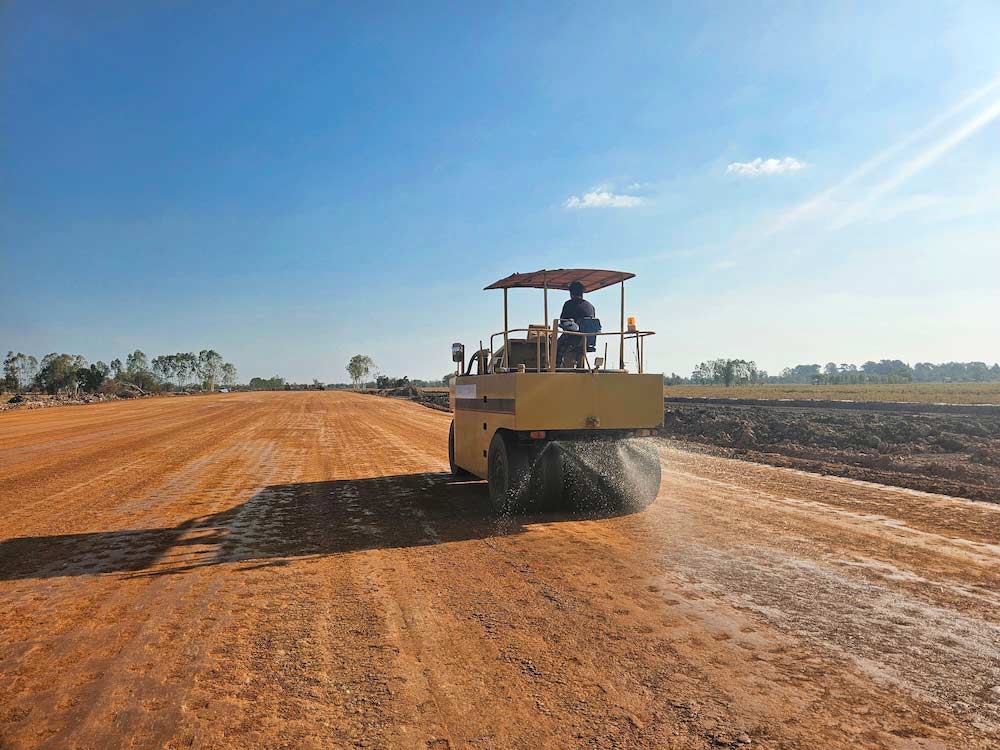
Pneumatic tire roller compactor for road construction

Have you ever wondered what processes the roads we drive on go through before becoming firm, safe, and durable pathways? One of the essential cornerstones in this process is the “Road Roller”—a massive machine packed with high power and equipped with front and rear drums or wheels designed to compact all surfaces smooth. This article takes an in-depth look at road rollers, covering pneumatic tire rollers, smooth steel rollers, and their crucial roles in building high-quality infrastructure.

Understanding Road Rollers

A road roller, commonly referred to as a compacting roller, is a specialized heavy engineering vehicle fitted with heavy cylindrical drums mounted on the front, or both front and rear. Its main function is to compact subgrade soil or asphalt smoothly using downward gravitational force exerted by the weight of the machine and drums. This process densifies layers of soil, sand, or aggregated materials to meet specific engineering standards, laying a solid foundation for efficient and seamless construction.

How Road Rollers Work

Road rollers feature massive roller-like wheels arranged in dual front-rear setups or single front drum configurations engineered to distribute weight evenly across surfaces. As the machine slowly moves forward, pressure exerted by the wheels progressively compresses soil particles together, producing a stable, highly durable surface capable of bearing heavy traffic loads and continuous wear.

In standard road paving projects, road rollers work side-by-side with excavators and wheel loaders to achieve the shared goal of constructing strong, long-lasting, visually clean, and safe roadways.

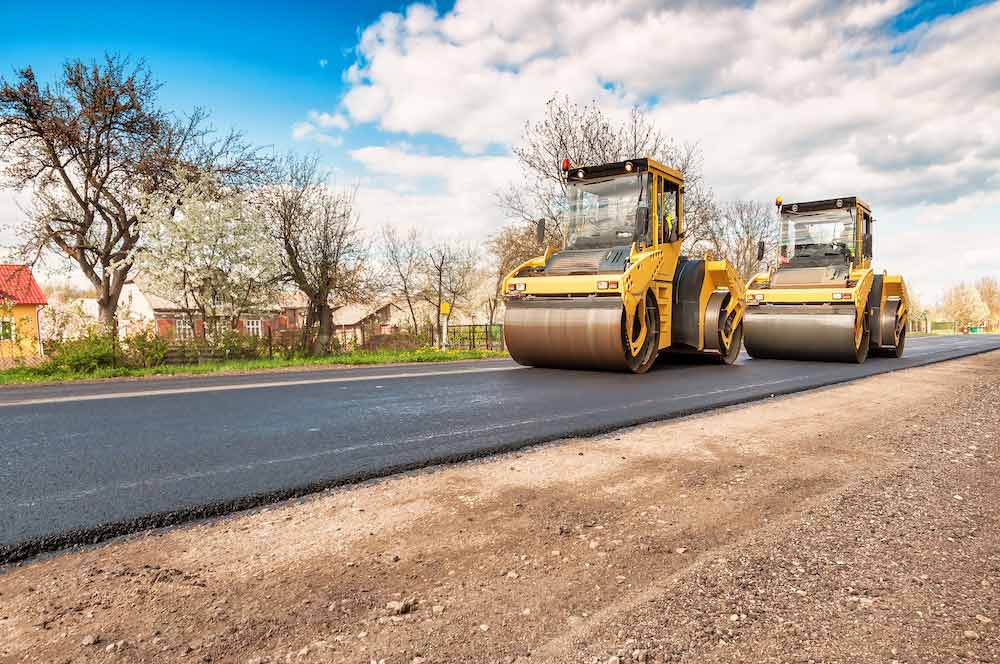
Road rollers working on site to ensure smooth road surfaces

Types of Road Rollers

Road rollers come in various configurations designed specifically for distinct applications across construction projects:

Pneumatic Tire Roller Compactor

Equipped with multiple wide rubber tires, pneumatic rollers compact coarse aggregate materials like soil, sand, or crushed stone layer by layer into a uniform, smooth, and densely packed surface. They are essential machinery in road building due to their ability to rearrange internal soil structures efficiently.

Pneumatic tire rollers excel in high-precision finishing tasks, such as compacting asphalt courses on highways, airport runways, and industrial foundation pads where strict density and flatness tolerances are mandatory. This precise compaction directly ensures traffic safety and structural longevity.

Smooth-Wheel Rollers

Recognizable by their large steel drums situated at the front and rear, smooth-wheel rollers compact coarse materials such as laterite, gravel, sandstone, and well-graded soils. They are generally not recommended for heavy cohesive clay soils.

Smooth-wheel rollers are preferred for high-load projects like expressways, airports, seaports, and dams where surfaces must withstand extreme pressure, heavy loads, and continuous impact without settling.

Sheepsfoot Rollers (Tamping Foot Rollers)

Featuring a front drum studded with protruding rectangular lugs (“feet”) and rear rubber tires, sheepsfoot rollers compact non-cohesive or poor-quality soils, including laterite, gravel, sandy soils, and small stones, by kneading deeper soil layers to increase density.

Sheepsfoot rollers are ideal for strengthening soil cohesion and reducing water permeability in embankment foundations, highway subgrades, harbor facilities, dam cores, and heavy industrial plant foundations.

Vibrating Rollers

Vibrating rollers are among the most widely used compactors. Resembling smooth-wheel rollers but fitted with rear pneumatic tires, they utilize internal eccentric weights to generate dynamic vibrations inside the drum. These vibrations agitate soil particles, causing them to shift and lock closely together. They are commonly applied to sandy soils, gravel-sand mixtures, laterite, and crushed stone bases.

Vibrating rollers are suited for compacting bridge abutments, trench backfills behind culverts, and tight working areas inaccessible to standard heavy rollers.

Pneumatic and steel rollers provide heavy-duty compaction across large work sites, working seamlessly alongside excavators and loaders to complete job requirements efficiently.

For businesses seeking reliable excavation machinery, SIAM SUN provides high-performance wheel loaders and excavators for rental at competitive rates to meet all project demands. We offer multiple models and sizes supported by a 24-hour maintenance response, a 1-year or 2,000-hour warranty, and ISO 9001:2015 certification. Supported by an extensive in-house spare parts warehouse and 4 service centers nationwide, we deliver uncompromised service.

For inquiries, contact Sales at 086-302-1778, Customer Service at 086-307-1778, or via LINE: @siamsun

References