




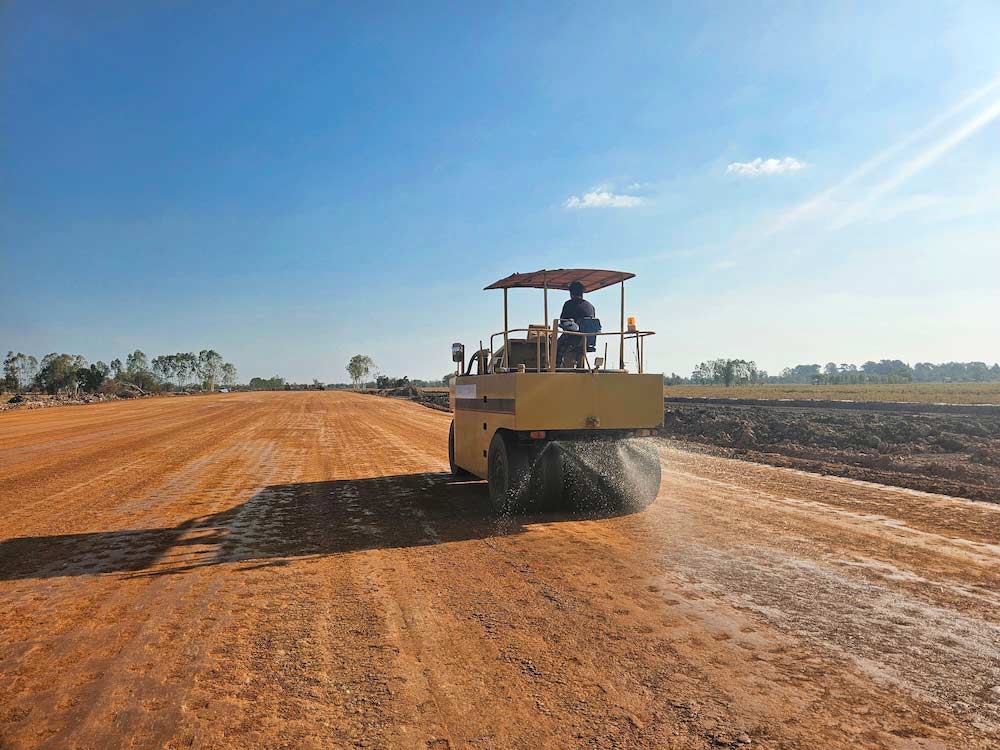
Have you ever wondered what processes the roads we drive on go through before becoming firm, safe, and durable pathways? One of the essential cornerstones in this process is the “Road Roller”—a massive machine packed with high power and equipped with front and rear drums or wheels designed to compact all surfaces smooth. This article takes an in-depth look at road rollers, covering pneumatic tire rollers, smooth steel rollers, and their crucial roles in building high-quality infrastructure.
Understanding Road Rollers
A road roller, commonly referred to as a compacting roller, is a specialized heavy engineering vehicle fitted with heavy cylindrical drums mounted on the front, or both front and rear. Its main function is to compact subgrade soil or asphalt smoothly using downward gravitational force exerted by the weight of the machine and drums. This process densifies layers of soil, sand, or aggregated materials to meet specific engineering standards, laying a solid foundation for efficient and seamless construction.
How Road Rollers Work
Road rollers feature massive roller-like wheels arranged in dual front-rear setups or single front drum configurations engineered to distribute weight evenly across surfaces. As the machine slowly moves forward, pressure exerted by the wheels progressively compresses soil particles together, producing a stable, highly durable surface capable of bearing heavy traffic loads and continuous wear.
In standard road paving projects, road rollers work side-by-side with excavators and wheel loaders to achieve the shared goal of constructing strong, long-lasting, visually clean, and safe roadways.
Types of Road Rollers
Road rollers come in various configurations designed specifically for distinct applications across construction projects:
Pneumatic Tire Roller Compactor
Equipped with multiple wide rubber tires, pneumatic rollers compact coarse aggregate materials like soil, sand, or crushed stone layer by layer into a uniform, smooth, and densely packed surface. They are essential machinery in road building due to their ability to rearrange internal soil structures efficiently.
Pneumatic tire rollers excel in high-precision finishing tasks, such as compacting asphalt courses on highways, airport runways, and industrial foundation pads where strict density and flatness tolerances are mandatory. This precise compaction directly ensures traffic safety and structural longevity.
Smooth-Wheel Rollers
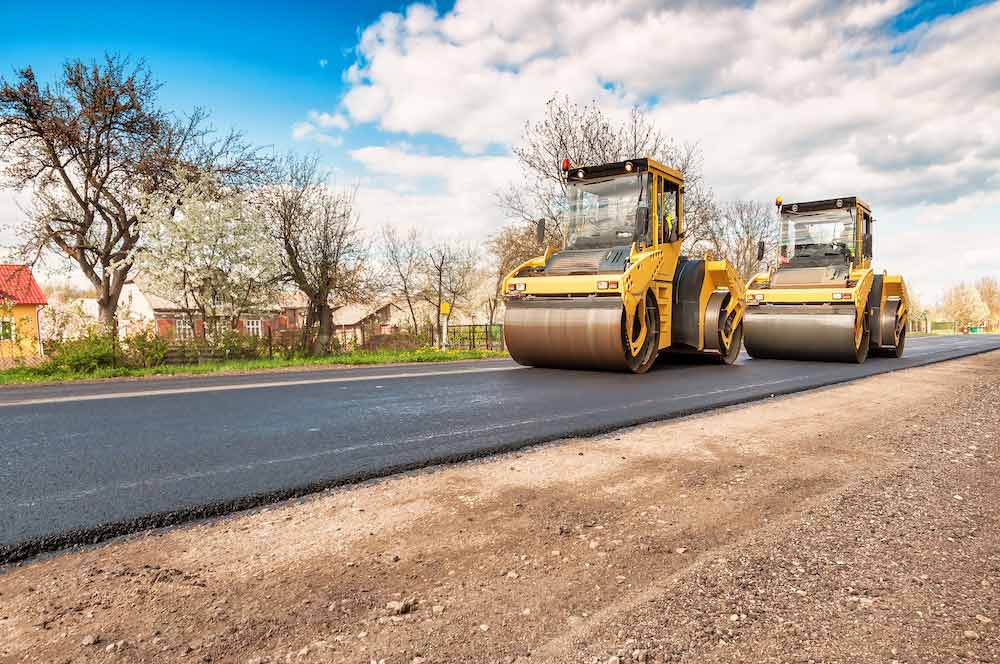
Recognizable by their large steel drums situated at the front and rear, smooth-wheel rollers compact coarse materials such as laterite, gravel, sandstone, and well-graded soils. They are generally not recommended for heavy cohesive clay soils.
Smooth-wheel rollers are preferred for high-load projects like expressways, airports, seaports, and dams where surfaces must withstand extreme pressure, heavy loads, and continuous impact without settling.
Sheepsfoot Rollers (Tamping Foot Rollers)
Featuring a front drum studded with protruding rectangular lugs (“feet”) and rear rubber tires, sheepsfoot rollers compact non-cohesive or poor-quality soils, including laterite, gravel, sandy soils, and small stones, by kneading deeper soil layers to increase density.
Sheepsfoot rollers are ideal for strengthening soil cohesion and reducing water permeability in embankment foundations, highway subgrades, harbor facilities, dam cores, and heavy industrial plant foundations.
Vibrating Rollers
Vibrating rollers are among the most widely used compactors. Resembling smooth-wheel rollers but fitted with rear pneumatic tires, they utilize internal eccentric weights to generate dynamic vibrations inside the drum. These vibrations agitate soil particles, causing them to shift and lock closely together. They are commonly applied to sandy soils, gravel-sand mixtures, laterite, and crushed stone bases.
Vibrating rollers are suited for compacting bridge abutments, trench backfills behind culverts, and tight working areas inaccessible to standard heavy rollers.
Pneumatic and steel rollers provide heavy-duty compaction across large work sites, working seamlessly alongside excavators and loaders to complete job requirements efficiently.
For businesses seeking reliable excavation machinery, SIAM SUN provides high-performance wheel loaders and excavators for rental at competitive rates to meet all project demands. We offer multiple models and sizes supported by a 24-hour maintenance response, a 1-year or 2,000-hour warranty, and ISO 9001:2015 certification. Supported by an extensive in-house spare parts warehouse and 4 service centers nationwide, we deliver uncompromised service.
For inquiries, contact Sales at 086-302-1778, Customer Service at 086-307-1778, or via LINE: @siamsun
References
- 6 Types of Rollers Commonly Used in Construction Projects. Retrieved June 25, 2024, from https://www.bigrentz.com/blog/types-of-rollers