





Electric forklifts play a critical role across various industries. They improve operational efficiency, save time, and reduce manual labor. Furthermore, using electric forklifts minimizes operator injury risks from heavy lifting. Following a proper electric forklift battery charging guide preserves battery performance and extends overall machine service life. In this article, we share proper charging techniques and essential maintenance tips.
Electric Forklifts and Energy Storage Batteries
An electric forklift is an industrial vehicle powered by electric motors. It moves smooth loads across flat floors and sloped ramps easily. The vehicle features heavy steel forks that extend from the front chassis. Consequently, operators use these forks to lift and transport large cargo that exceeds human capacity. Additionally, operators can adjust the fork height and tilt angle freely.
The traction battery serves as the heart of an electric forklift. It supplies electric power to drive motors and vital subsystems. These subsystems include hydraulic lift pumps, braking systems, and directional lights. High-quality forklift batteries deliver high discharge efficiency and long operational lifespans.
Lifespan of Forklift Batteries
Technicians measure forklift battery lifespan in charge cycles. One cycle equals discharging the battery down and fully recharging it back to 100%. On average, industrial forklift batteries last 5 to 6 years, or approximately 500 to 1,500 charge cycles.
However, actual battery degradation depends on several factors. These factors include chemical battery type, daily workload intensity, and routine maintenance quality.
Techniques for Charging Electric Forklift Batteries
1. Area Preparation Before Charging
- Select a safe charging area away from heat sources and moisture. Ensure the room provides good air ventilation.
- Clear all obstacles around the charging station. Park the forklift close to the charger unit.
- Inspect power plugs and power cables for any physical damage or wear.
- Open the water cap to inspect distilled water levels. Ensure water covers internal cell plates by 1 to 2 centimeters.
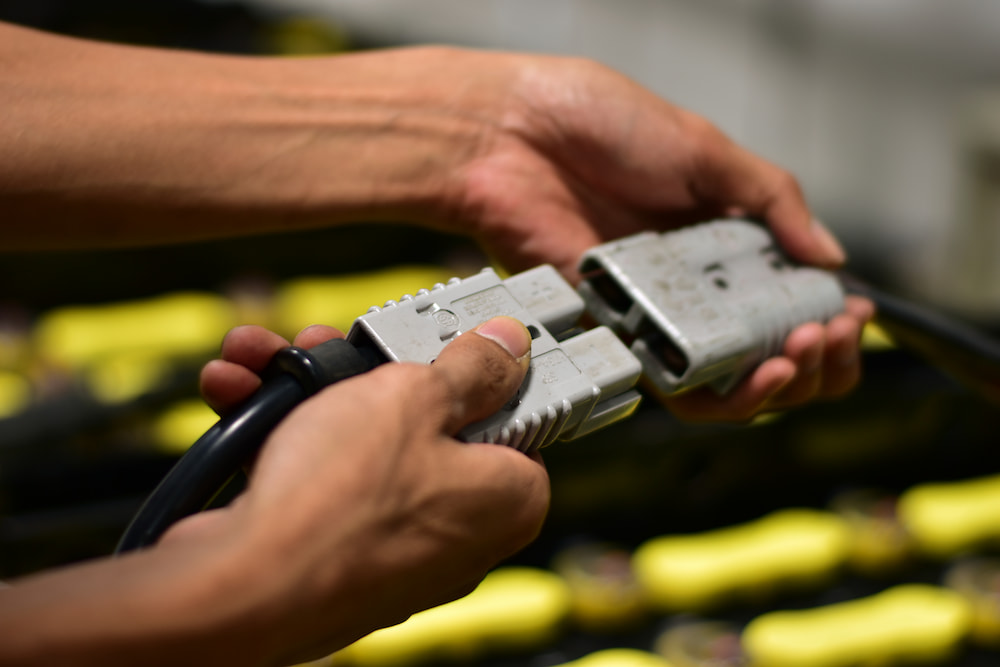
- Check connector plugs between the battery and the charger cabinet. Ensure no cracks or electrical leakage risks exist.
2. Battery Charging Protocol
- Connect the charging cable plug firmly into the charger cabinet outlet.
- Charge the battery continuously for 8 hours per session, depending on battery capacity.
- Disconnect the plug safely after the charging cycle completes, then close all protective covers.
- Schedule a qualified technician to test cell voltage and specific gravity at least once a month.
Pro Tip: Avoid letting battery capacity drop below 20%. Deep discharging increases charging time and shortens overall battery life. Additionally, avoid charging hot batteries right after heavy shifts to prevent thermal damage.
Maintenance Tips to Extend Forklift Battery Life
- Train operators on proper forklift controls before deployment. Always operate machines in clean environments to prevent vehicle damage.
- Check battery capacity indicators or meters at least once a week.
- Inspect distilled water levels regularly. Top up with pure distilled water to maintain cell efficiency.
- Recharge battery cells completely after daily operations to extend working life.
- Perform all charging operations in dry, well-ventilated areas to prevent short circuits or fire hazards.
- Maintain charger systems regularly to ensure consistent power output and peak operational safety.
If you need reliable electric forklifts for material handling operations, choose Siam Sun Autosales. We offer high-quality electric forklifts at competitive prices to fit all industrial applications. Our fleet comes with multiple capacity choices, a 24-hour maintenance response, a 1-year or 2,000-hour warranty, and ISO 9001:2015 certification. For inquiries, contact Sales at 086-302-1778 today.
“`